Large Format Tile in Tampa Bay: The 24x48, 30x60, and Slab Era
The fewer grout joints, the more the architecture reads. Large format porcelain has shifted from a niche choice to the dominant look in new luxury builds and high end remodels.
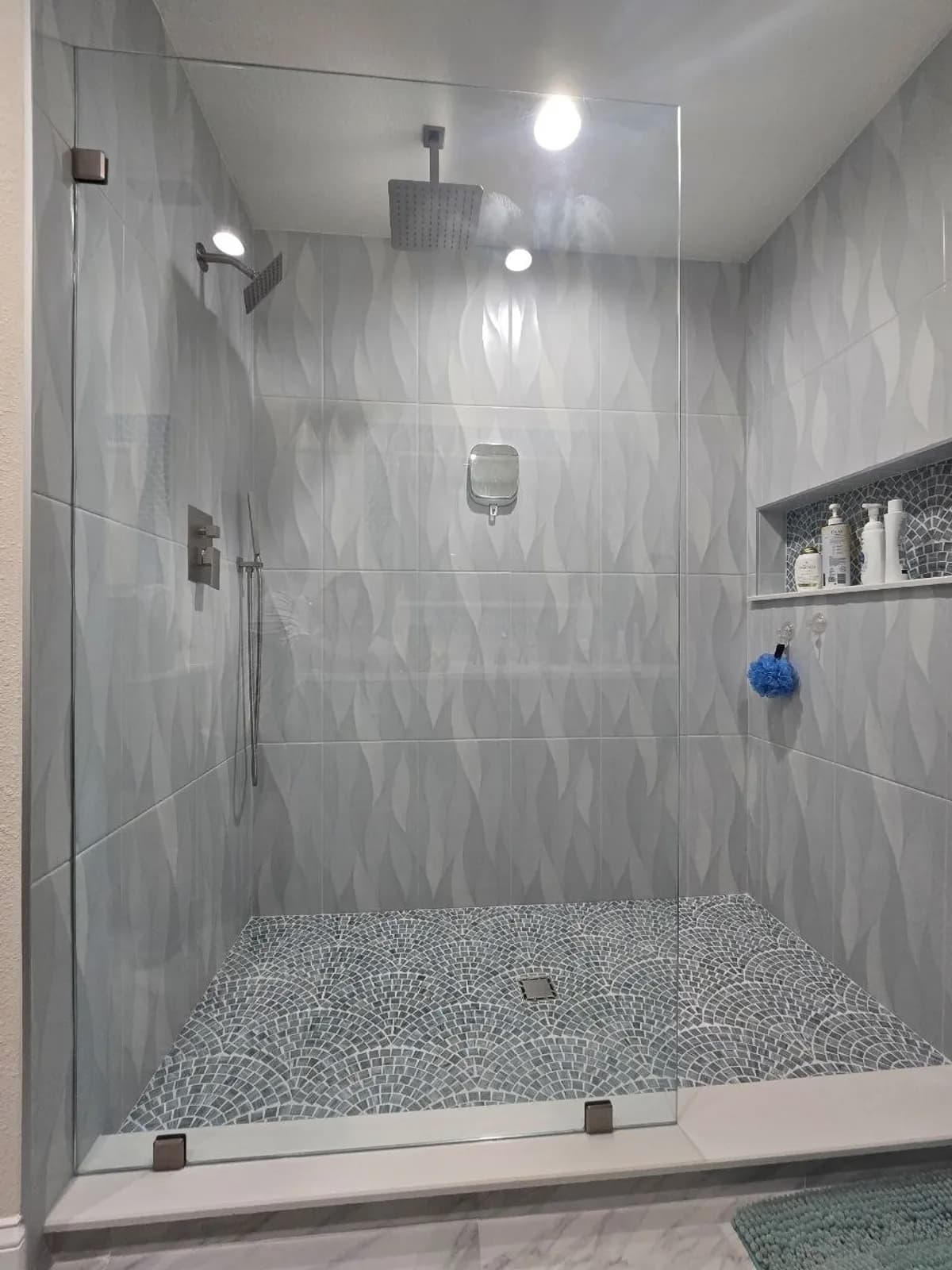
Ten years ago a 12x24 floor tile was considered big. Today, walk through any luxury new build in Westchase or Tierra Verde and you will see 24x48 inch floor tile, 30x60 wall planks, and 5 foot wide porcelain slabs covering entire shower walls without a single grout line. The shift is not just a fashion trend, it reflects what porcelain manufacturers can now produce and what skilled installers can now set flat.
Why the look works
A grout joint is a visual line. The more lines, the busier the surface. Large format reduces those lines, which lets the tile pattern (marble veining, wood grain, stone movement) be the dominant element. In a 60 square foot shower, the difference between a 12x24 layout (roughly 60 grout joints) and a 30x60 layout (roughly 12 grout joints) is the difference between a tiled shower and a carved stone room.
It also reads larger. The same shower in 30x60 will feel meaningfully bigger than the same shower in 4x8 subway, simply because the eye reads fewer reference points.
Where large format makes the biggest difference
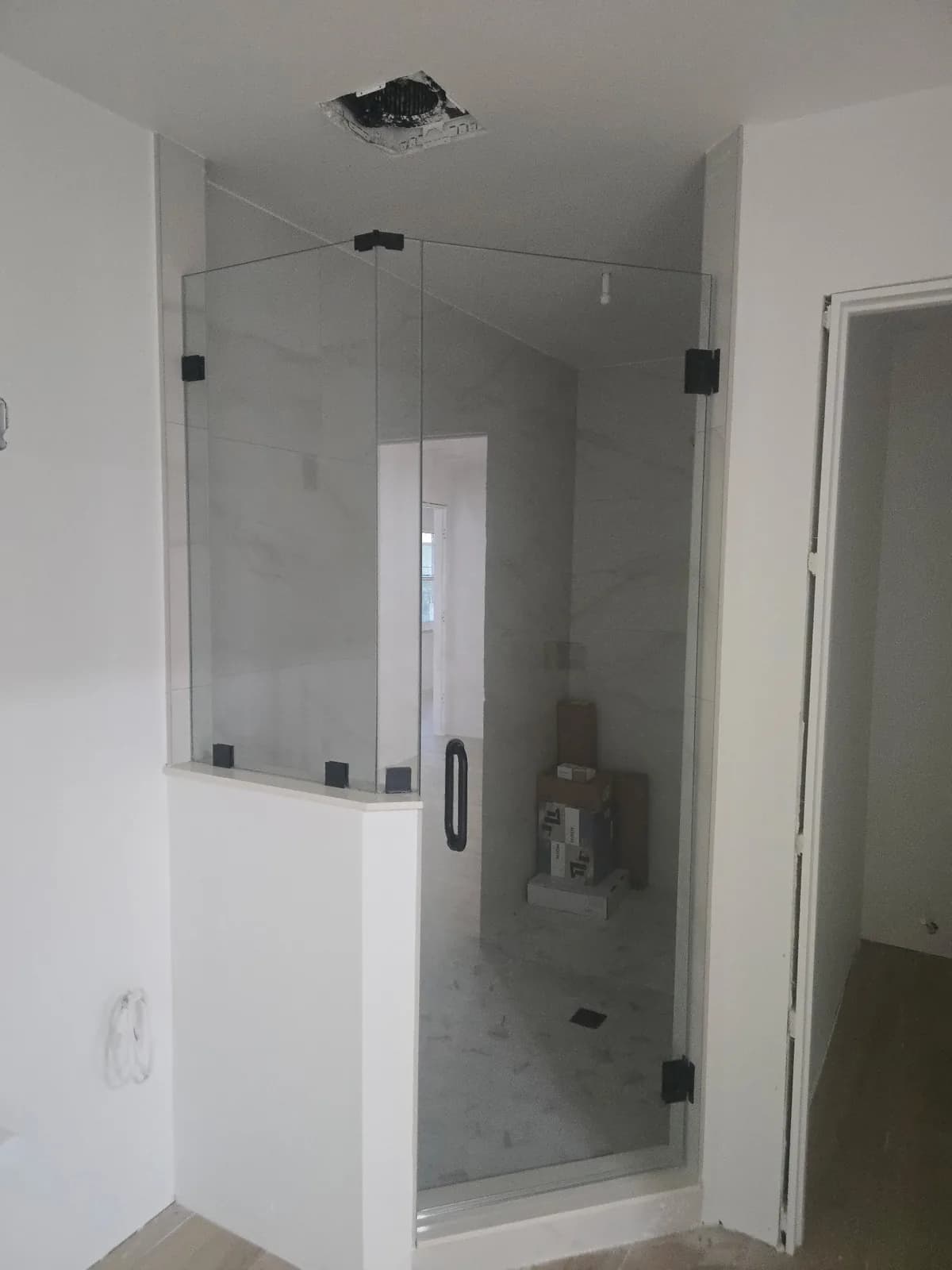
- Shower walls. The single most dramatic upgrade you can make to a master bath. Book matched veining across a 60 inch slab face is the current high end signature.
- Feature walls in great rooms and behind beds. Stone look porcelain reads like real stone at half the cost and none of the sealing.
- Open kitchen floors that flow into living rooms. A continuous 24x48 floor visually unifies open concept layouts.
- Master bath floors paired with curbless showers. The same large format tile runs from the bath floor straight into the shower without a curb or transition strip.
What the install actually requires
Large format is not just a bigger version of small tile. The setting techniques are meaningfully different and a fair number of tile guys in Tampa Bay still do not have them dialed in. Here is what we do on every large format job.
Substrate flatness
TCNA requires substrate flatness within 1/8 inch over 10 feet for tiles 15 inches or larger on any side. In practice, almost no Florida slab or wood subfloor meets that out of the box. We screed self leveling underlayment on slabs and use cement based patching on wood subfloors. Skipping this step is the number one cause of lippage, where tile edges sit slightly higher than their neighbors, on large format installs.
Back buttering and large format thinset
We back butter every tile 24 inches or larger, applying thinset directly to the back of the tile in addition to the substrate. This guarantees full coverage and prevents voids that show up as hollow spots or hot spots that eventually fracture. We use LHT (Large and Heavy Tile) mortar, which is medium bed rated, not standard thinset. The bed thickness is what supports the tile evenly.
Leveling clips
Plastic leveling systems (we use Raimondi or Tuscan) clip each tile edge to its neighbor while the thinset cures, eliminating any lippage. We pull the clips after 24 hours. Without this system, even careful installers will see 1/32 to 1/16 inch lippage on large format, enough to catch with a fingernail and ruin the seamless look.
Cutting
A 5 foot slab cannot be cut on a tabletop wet saw. We use rail mounted slab cutters and water fed angle grinders with continuous rim diamond blades. Outlet, valve, and faucet cutouts are made with diamond hole saws and CNC style templates.
Grout, edges, and the details that finish the look
Grout
For large format we use tight grout joints, typically 1/16 inch for rectified edge porcelain and 1/8 inch for slightly cushioned edge tiles. Color matched to the tile field so the joint visually disappears. Mapei Flexcolor CQ or Laticrete PermaColor Select are our usual specs. They resist staining and never need sealing.
Outside corners and edges
On shower walls and feature walls, we either mitre the corners (a 45 degree bevel cut on the tile so the corner is solid stone look material with no exposed edge) or finish with a Schluter Jolly or RONDEC profile in a matching metal finish. Both look intentional, both protect the corner from chipping.
If you are considering large format tile, see it in person at our partner showrooms. We design with ProSource of Tampa and the Coastal Bath Studio team to spec the right slab for your space.
Start a designMore from the journal
Tile Trends for 2026: What Tampa Bay Homeowners Are Choosing
A look at the eight tile and design choices showing up most in our 2026 estimates, why they work in Florida light, and where each one lands on the budget.
Tile Patterns Decoded: Herringbone, Chevron, Basketweave, and Versailles
A pattern is not just a look. It changes labor, waste, and what the room feels like. Here is what each classical pattern actually costs and where it shines.
The Schluter Shower System, Explained for Florida Homeowners
Most tile failures in Florida bathrooms are not tile failures. They are waterproofing failures hidden behind tile. The Schluter system removes the gamble.
Every project starts with a written, itemized estimate.
Florida State Certified Building Contractor since 2007. Schluter certified installers. Serving Pasco, Hernando, Pinellas, Hillsborough, and Citrus.