Tile Patterns Decoded: Herringbone, Chevron, Basketweave, and Versailles
A pattern is not just a look. It changes labor, waste, and what the room feels like. Here is what each classical pattern actually costs and where it shines.
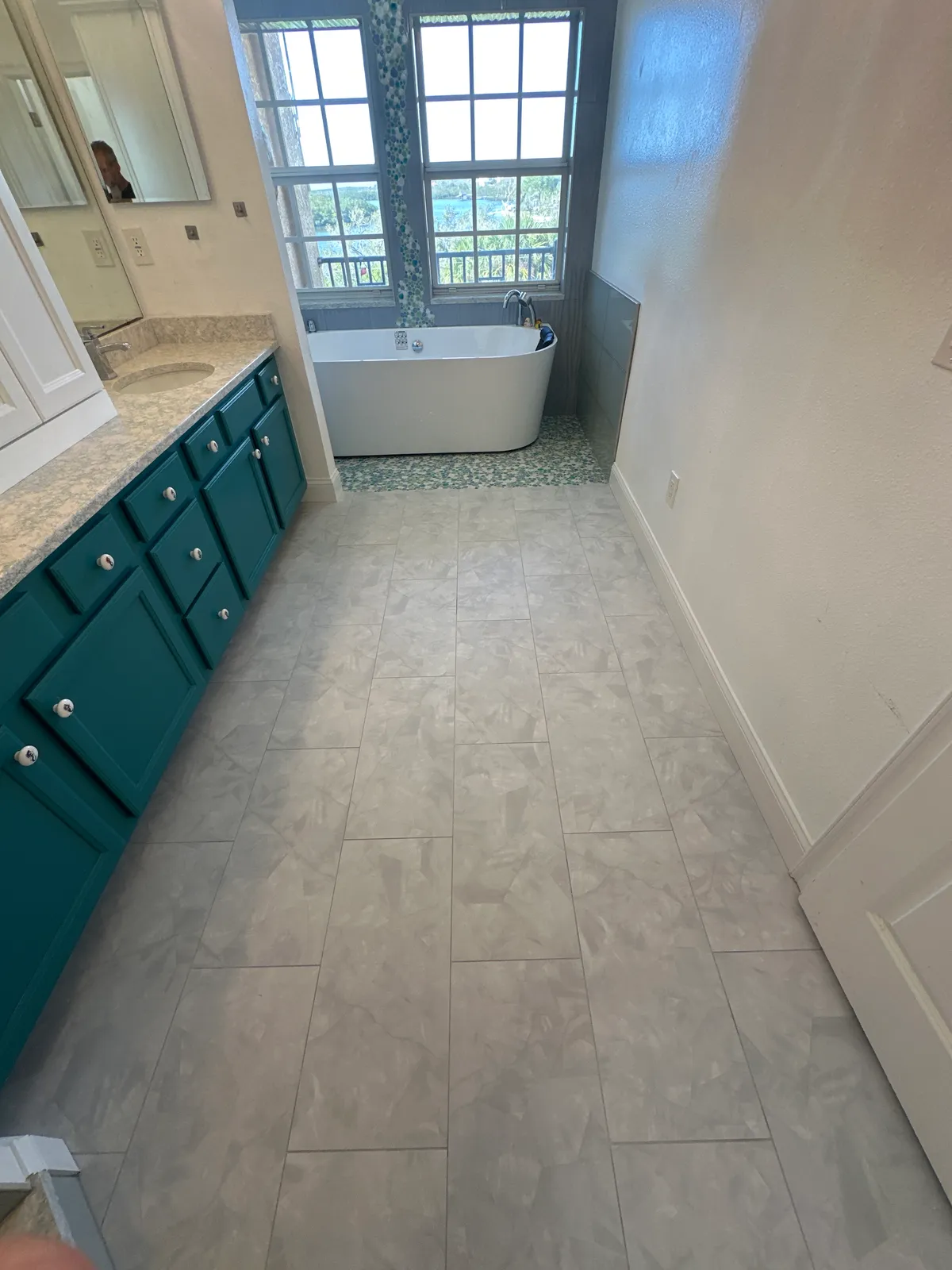
Choose a running bond subway and the install is fast, the waste is minimal, and the room reads classic. Choose a Versailles pattern in natural stone and you have added 30 percent to material cost, 50 percent to labor, and three days to the schedule, but you have created a room that feels carved from a French chateau. The pattern matters. Here is a practical guide to the classics.
Herringbone
Two rectangular tiles meeting at 90 degrees, creating a zigzag pattern. The dominant decorative pattern of the last decade, partly because it works at every scale (1x4 mosaic to 8x48 plank) and reads contemporary or traditional depending on the tile.
- Best for: shower floors (smaller herringbone gives traction and visual interest), kitchen backsplashes, accent walls, and feature panels
- Waste: roughly 12 to 15 percent versus 8 to 10 percent for straight set
- Labor premium: 20 to 35 percent over running bond
- Common pitfall: a 45 degree herringbone (turned to point at the viewer) requires more cutting and more waste than a 90 degree herringbone, but reads more dynamic. Choose intentionally.
Chevron
Often confused with herringbone, but visually distinct. In chevron, the tiles are cut at a 45 degree angle on the ends so they meet point to point in a continuous V. The result is a more refined, more directional pattern that feels couture rather than classic.
- Best for: feature walls behind beds and tubs, narrow accent strips, sophisticated kitchen backsplashes
- Material: must be ordered as a chevron cut product (rare) or hand cut on site (expensive). Waste is 18 to 22 percent
- Labor premium: 35 to 50 percent
- Common pitfall: cheap chevron look tiles (a single tile printed to look like chevron) usually read flat and obvious. Real chevron is worth the cost if you want the effect.
Basketweave
Two rectangular tiles laid parallel with a third (often a contrasting small tile or dot) framing them, creating a woven pattern. The most traditional of the classic patterns, especially associated with early 20th century bathrooms and powder rooms.
- Best for: small format powder room and classic bath floors, vintage and transitional master baths
- Material: premade mosaic sheets are common ($14 to $30 per sq ft). Custom basketweave can be set tile by tile
- Labor premium: minimal on mosaic sheets, significant if hand set
- Common pitfall: too small a scale reads busy in a large room. We do not recommend full floor basketweave in master baths over 80 sq ft. Use it as a rug inset or in a powder room.
Versailles
A repeating multi size pattern using four different tile sizes (typically 8x8, 8x16, 16x16, and 16x24) to create a pseudo random natural stone courtyard feel. Originally a 17th century French pattern, traditionally cut from natural travertine, limestone, or marble.
- Best for: travertine and limestone foyers, Old World Mediterranean kitchens and great rooms, indoor outdoor lanai conversions
- Material: usually sold as a pattern set prebundled in the four sizes. Expect to pay 15 to 30 percent more than rectangular tile of the same material
- Labor premium: 25 to 40 percent. The layout requires careful planning to avoid pattern collisions at room edges
- Common pitfall: looks dated in cool tone porcelain (we do not recommend Versailles in modern grey porcelain). Sings in warm tone natural stone.
Running bond, stacked, and modern variants
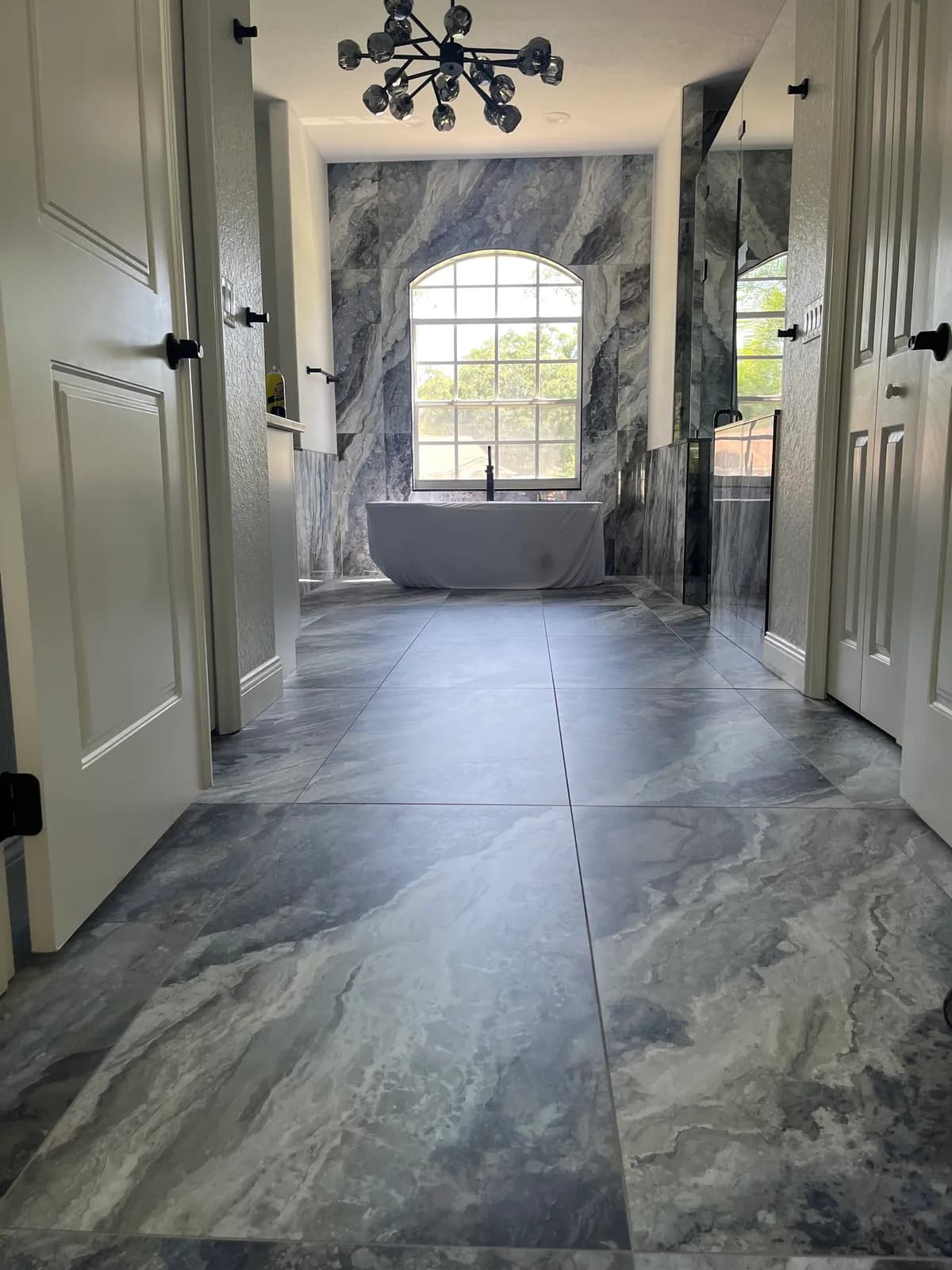
The currently most installed patterns in new Tampa Bay luxury builds are simpler. Straight stacked (no offset, perfectly aligned grid) for shower walls, especially with large format tile. Vertical stacked subway for kitchen backsplashes. 1/3 offset (rather than 1/2 offset) for plank look wood grain porcelain to mimic how real hardwood planks are laid.
Bring a pattern idea to your design conversation, or come without one and we will suggest options based on your space and palette.
Open the design wizardMore from the journal
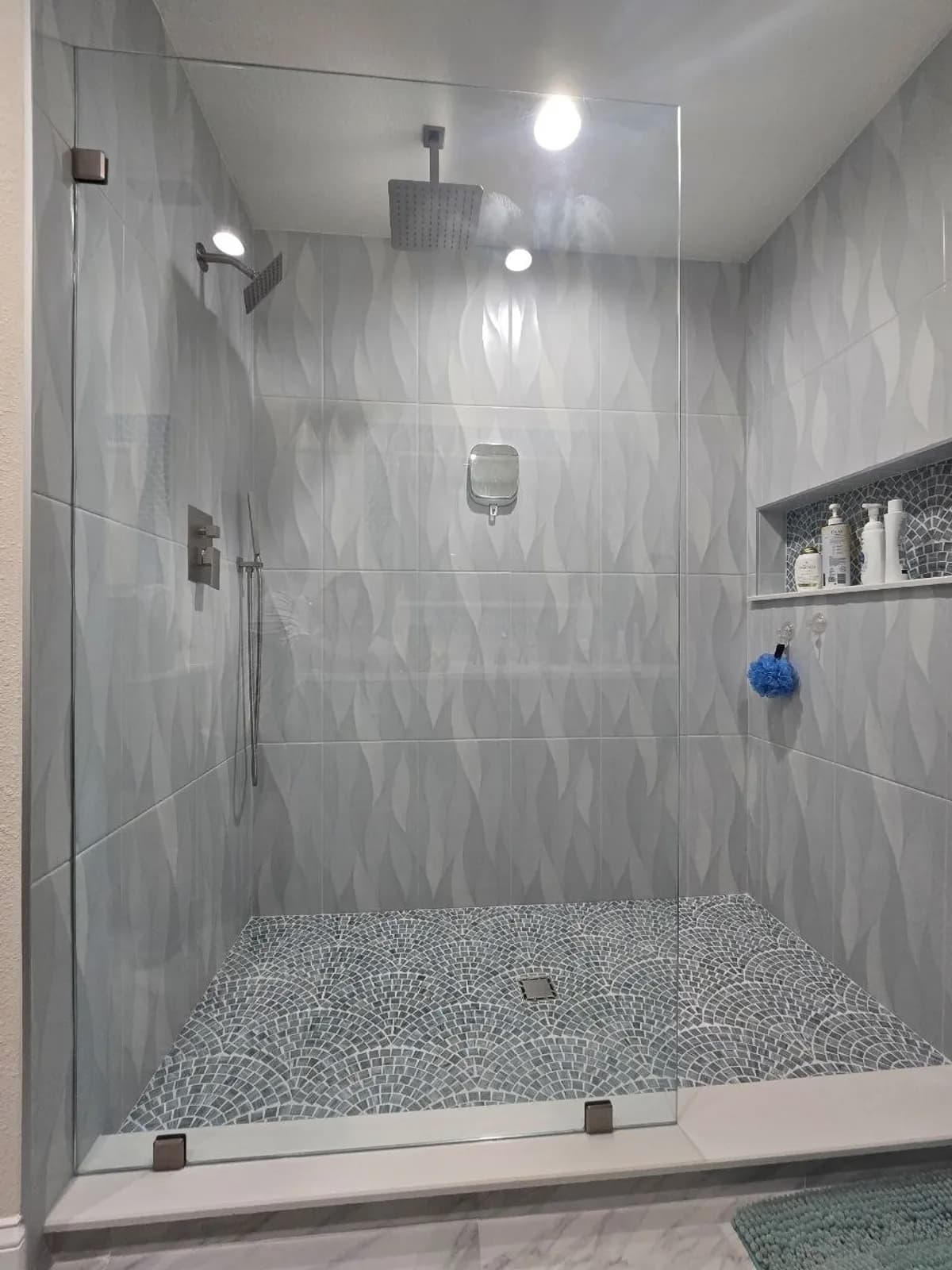
Large Format Tile in Tampa Bay: The 24x48, 30x60, and Slab Era
The fewer grout joints, the more the architecture reads. Large format porcelain has shifted from a niche choice to the dominant look in new luxury builds and high end remodels.
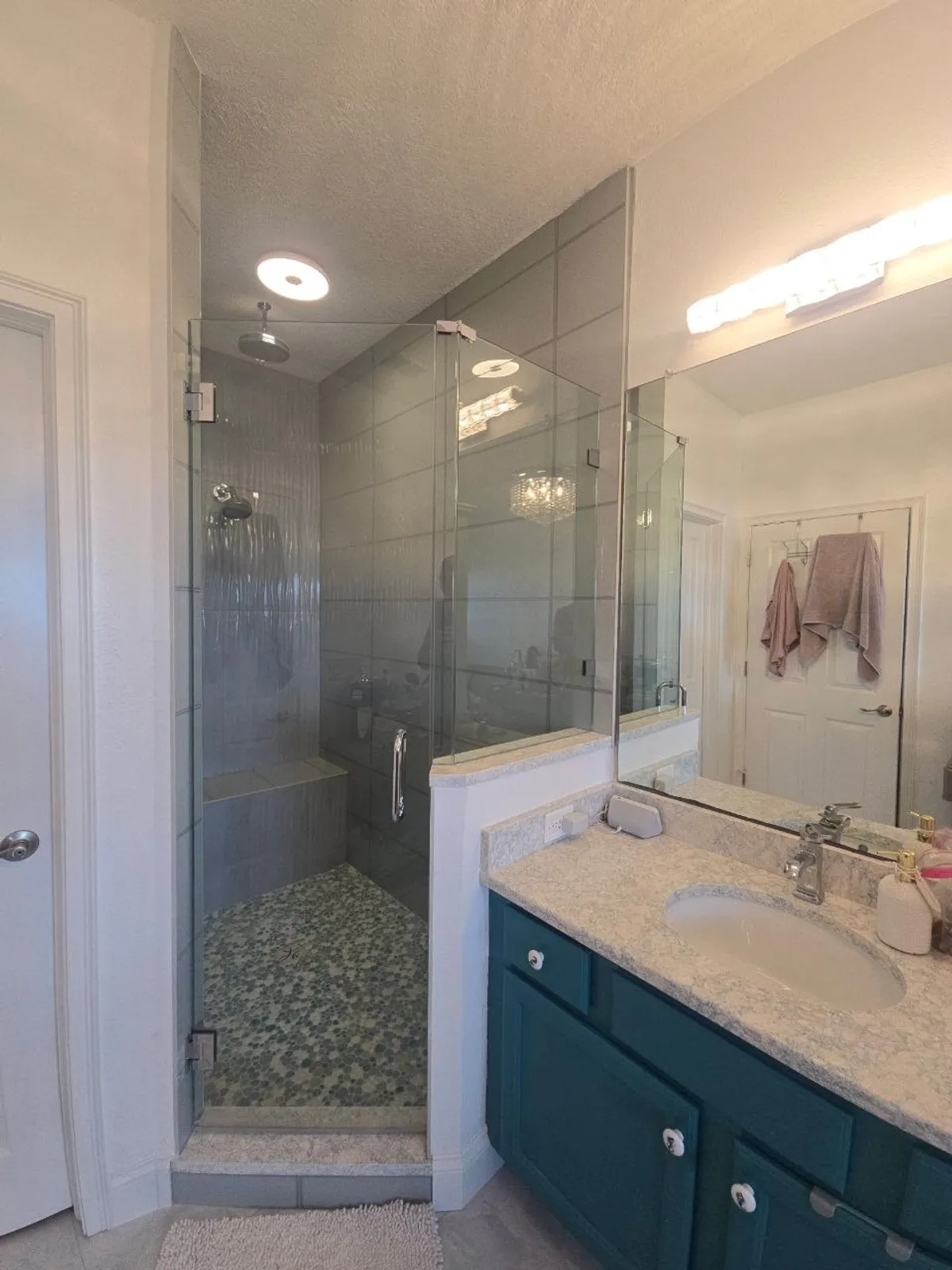
Tile Trends for 2026: What Tampa Bay Homeowners Are Choosing
A look at the eight tile and design choices showing up most in our 2026 estimates, why they work in Florida light, and where each one lands on the budget.
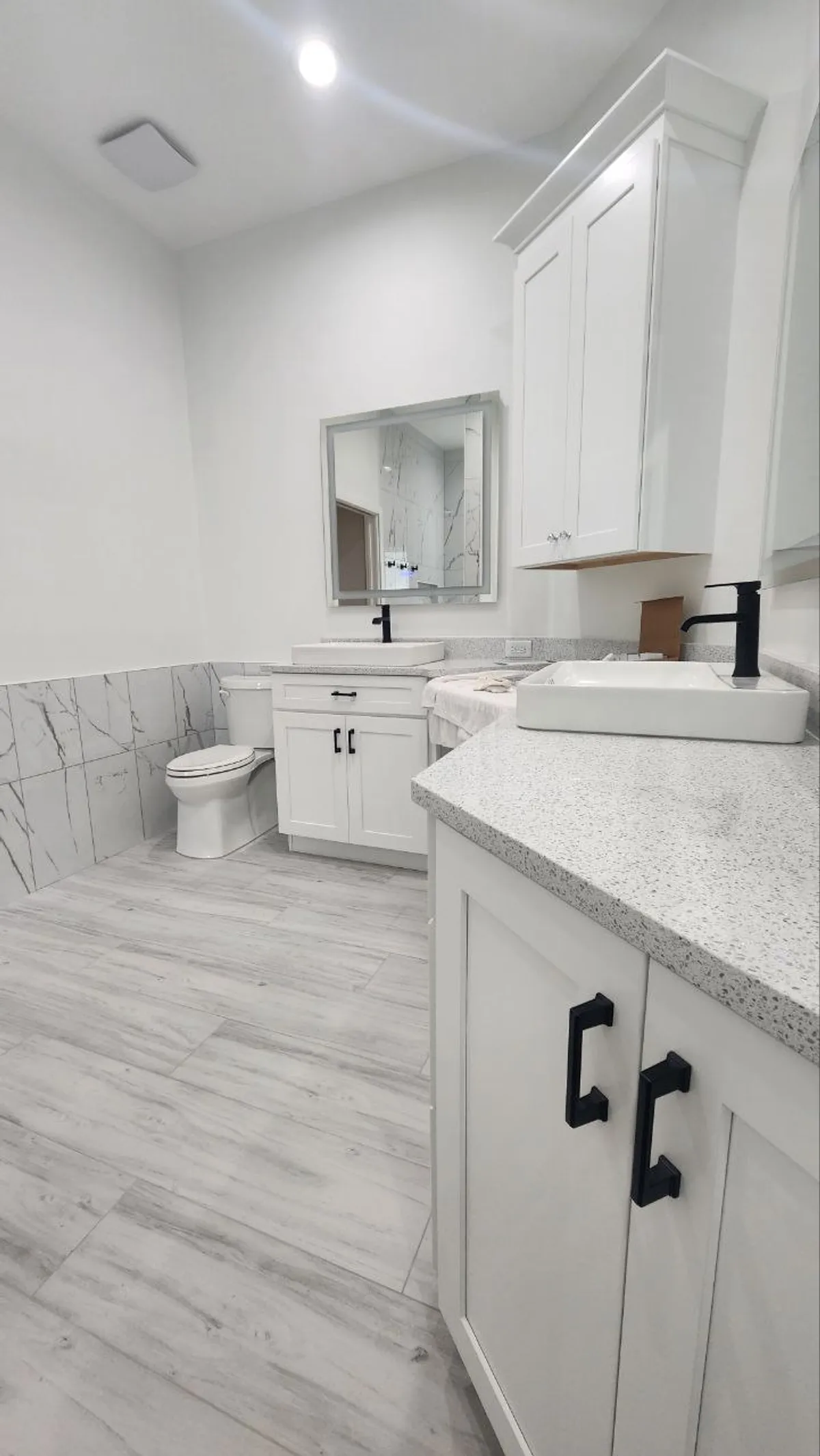
The Schluter Shower System, Explained for Florida Homeowners
Most tile failures in Florida bathrooms are not tile failures. They are waterproofing failures hidden behind tile. The Schluter system removes the gamble.
Every project starts with a written, itemized estimate.
Florida State Certified Building Contractor since 2007. Schluter certified installers. Serving Pasco, Hernando, Pinellas, Hillsborough, and Citrus.