
The Schluter Shower System, Explained for Florida Homeowners
Most tile failures in Florida bathrooms are not tile failures. They are waterproofing failures hidden behind tile. The Schluter system removes the gamble.
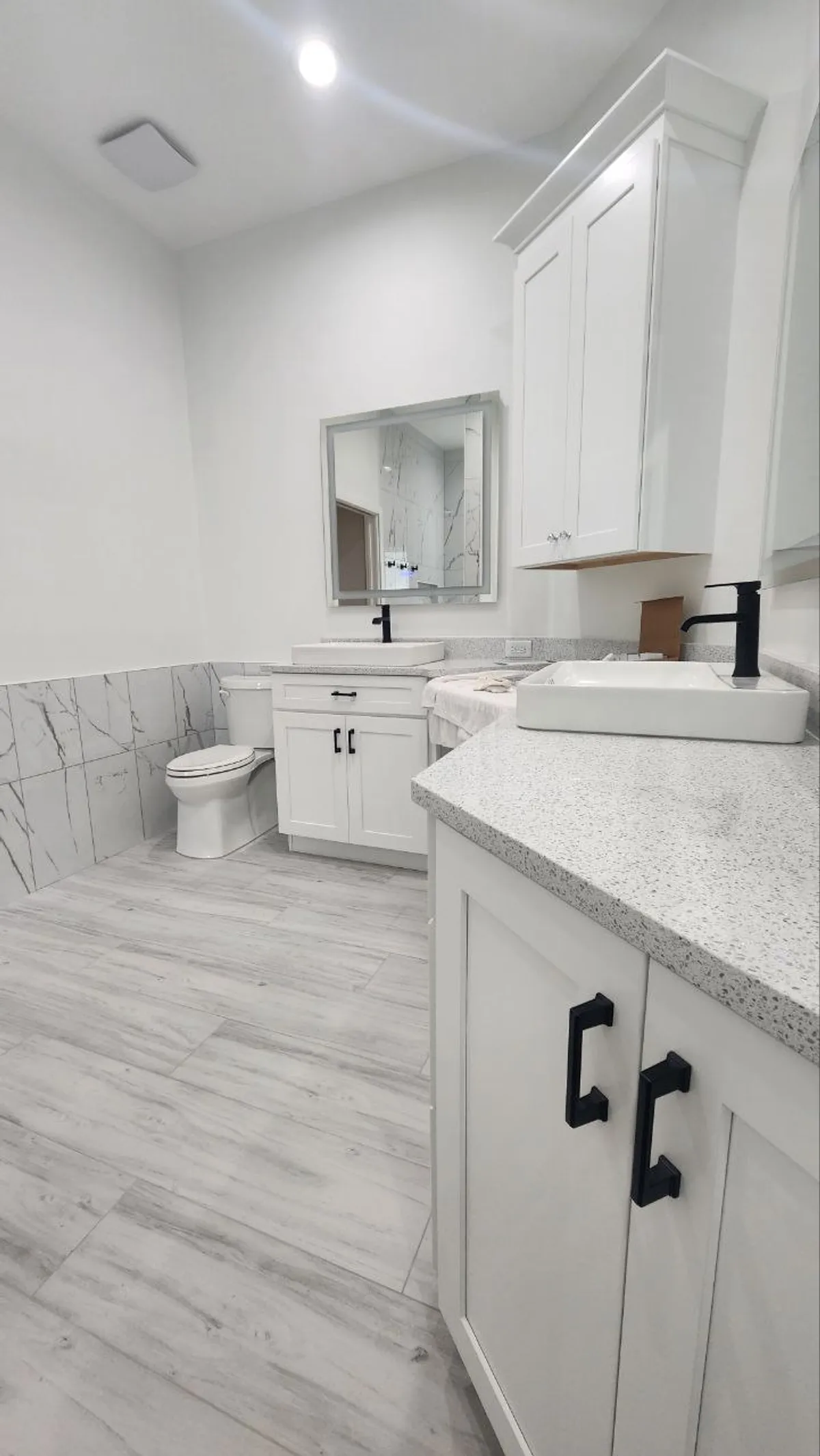
Walk into ten bathroom remodels in Tampa Bay and you will see ten beautiful tile jobs. What you will not see is what is behind the tile. That hidden assembly, the waterproofing, the substrate, the way the niche is sealed, the way the drain meets the membrane, is what separates a shower that looks new in fifteen years from one that develops a musty smell in two.
Every custom shower we build at Coastal Tile is constructed on the Schluter Systems shower assembly. Below is the why, in plain English, and the how, in enough detail that you can ask any contractor in town the right follow up questions.
The problem Schluter was invented to solve
For decades, shower waterproofing in the United States was a hope it works affair. Builders nailed up greenboard, slapped on a layer of tar paper or roll on membrane, and tiled. Water that got past the tile (and water always gets past the tile) was supposed to drain out through weep holes in the shower pan. Often, it did not. It pooled, it migrated, it rotted framing and fed mold colonies that homeowners only discovered when the floor sagged.
Schluter, a German company that started in the 1970s, took the opposite approach. Instead of letting water in and trying to drain it out, they engineered a sealed envelope, a sheet membrane bonded directly to the substrate, with every penetration (drain, valve, niche, bench, curb) bonded to that same membrane. Water never reaches the substrate in the first place.
The five components, and what each one actually does
KERDI Membrane, the waterproofing layer
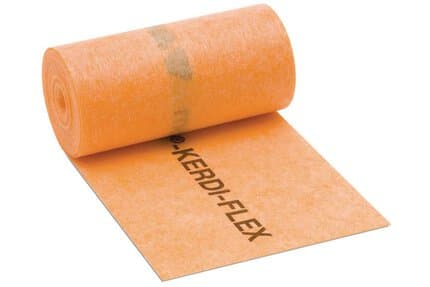
KERDI is a pliable, fleece laminated sheet membrane that bonds to the substrate with unmodified thinset. It is the single layer that makes the shower watertight. We run it up every wall, across the curb, into the niche, around the bench, and over the shower floor (or onto a KERDI SHOWER ST pan), with all seams overlapped and sealed. The result is a continuous, monolithic waterproof skin.
KERDI BOARD Substrate, the wall panels
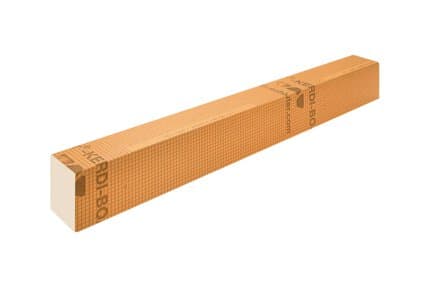
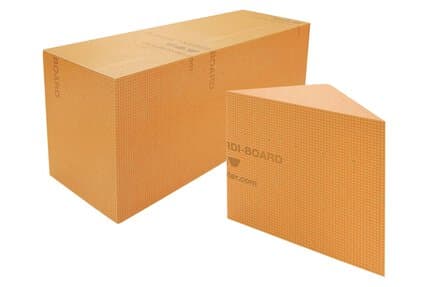
Traditional cement backer board (Durock, Hardie) is heavy, dusty, and not waterproof on its own. KERDI BOARD is a foam core panel with a polymer modified coating, lightweight, dimensionally stable, and waterproof out of the box. The signature orange panels are what you see during the rough phase of any Schluter shower we build. When seams are sealed with KERDI BAND, the substrate itself is part of the waterproofing envelope. We use it on shower walls, benches, curbs, and prefab niches.
KERDI LINE and KERDI DRAIN, the drains
This is where most shower failures start in remodels, the seal between the drain and the waterproofing. Schluter drains are engineered with an integrated bonding flange that the KERDI membrane laps onto and seals with thinset. There is no rubber gasket waiting to harden, no caulk joint that will eventually crack. The KERDI LINE linear drain is what makes curbless, zero entry showers possible, the floor can slope to a single edge instead of pyramid sloping to a center drain.
DITRA Uncoupling Membrane, for the bathroom floor
Tile cracks come from the substrate, not the tile. Subfloors move, concrete slabs cure and shrink, wood joists deflect with humidity. DITRA is a polyethylene membrane with a waffle profile that uncouples the tile from the substrate. The substrate can move, the tile cannot, the DITRA layer absorbs the differential. For wood subfloors in Florida (which expand and contract aggressively with our humidity swings) it is the difference between a floor that lasts 30 years and one that grows hairline cracks in the first summer.
DITRA HEAT, heated tile floors, optional
Same uncoupling principle, but with integrated heating cables. Programmable warm floors on cold January mornings, no added floor height beyond a single membrane, no risk of cracking around the cables. We install it most often in master bathrooms where the homeowner walks barefoot first thing in the morning.
Why we use Schluter on every shower, not just the high end ones
The honest answer is that we used to offer it as an upgrade. We stopped. Here is why.
- In Florida humidity, the failure rate of older mud pan or surface membrane systems is high enough that we were getting called back to rebuild showers we had built only six or seven years earlier. That is unacceptable on any project, but especially on a $40,000 master bath.
- The Schluter assembly carries a manufacturer backed system warranty when it is installed by certified installers and every component is from the same system. Mix and match assemblies do not.
- The labor cost difference between Schluter and a bargain assembly is small relative to the rest of the project, often $800 to $1,500 on a typical bathroom. The risk reduction is not small at all.
- It is faster. KERDI BOARD goes up in roughly half the time of cement board, no dust, no concrete saws, the panels can be cut with a utility knife.
What to ask any contractor you are getting estimates from
- 1.What waterproofing system are you using behind the tile, and is it a single brand, fully bonded assembly? Acceptable answers: Schluter, USG Durock with their full membrane system, Laticrete Hydro Ban. Unacceptable: we use cement board and tar paper, or vague answers about waterproofing the walls.
- 2.Is the drain bonded to the waterproofing membrane? If the answer is the plumber installed it before we got there, that is a red flag. Surface mounted drains in a tiled shower will eventually leak.
- 3.How are the niche and bench waterproofed? The right answer involves a fully wrapped, bonded niche. Tiles set on top of a wooden niche with a couple of inches of caulk is not waterproofing.
- 4.Are you a Schluter certified installer? This is not strictly required to do a good job, but it is a strong filter. Certified installers have hands on training that most general remodelers do not.
Curbless showers and Florida lifestyle design
The single biggest design trend Schluter has enabled in the last decade is the curbless shower. Older low curb showers needed a curb to dam water back to the drain. With a KERDI LINE linear drain set at the entry or back wall, the entire shower floor can slope in a single direction, and the shower floor can sit flush with the bathroom floor. The aesthetic is open and modern, and the practical benefit (for aging in place clients especially) is that there is no curb to step over.
For Tampa Bay homeowners building forever homes, curbless showers on Schluter assemblies have become close to standard on our master baths.
Planning a bathroom remodel? Every shower we build comes with a full Schluter waterproofing assembly, in writing, on the estimate.
Request an estimateMore from the journal
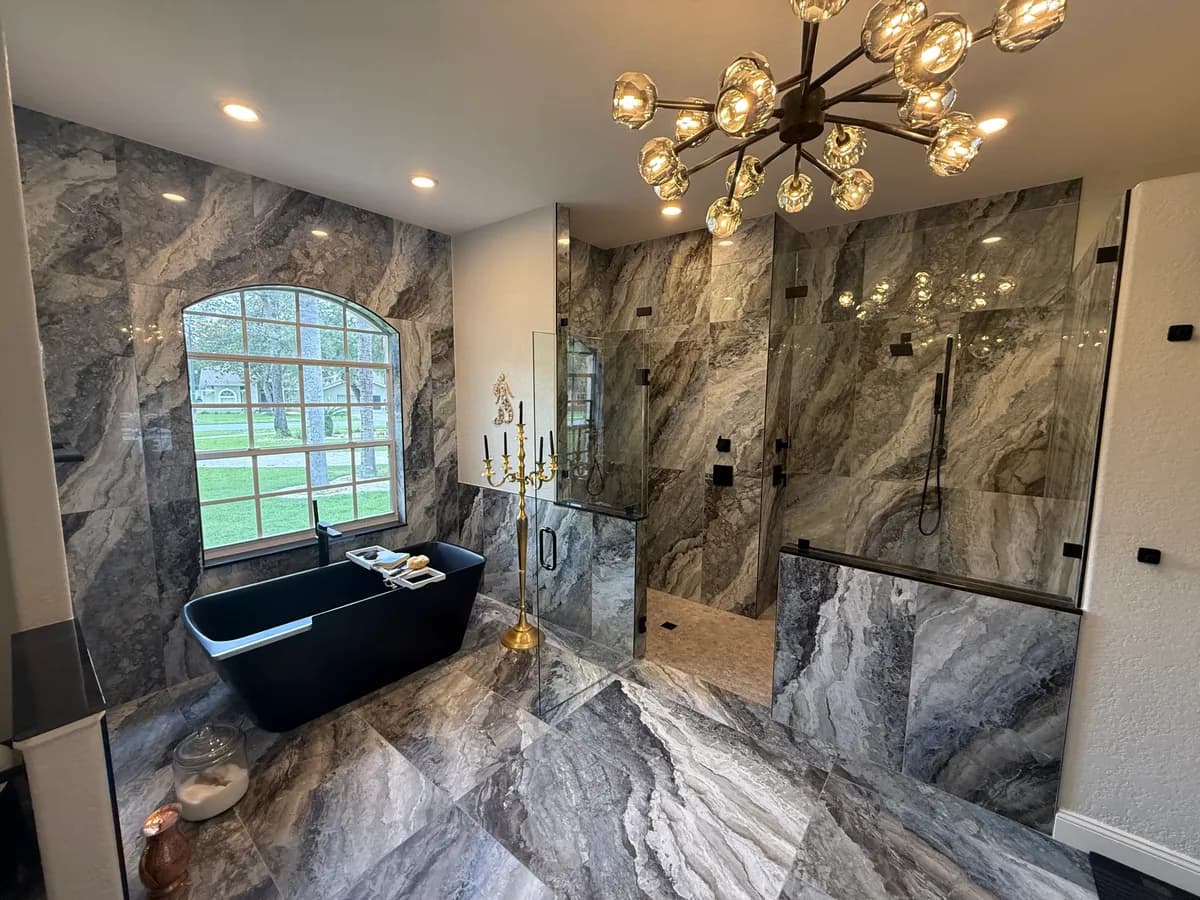
Why Tile Floors Crack, and How DITRA Fixes It
Tile does not crack on its own. The slab or subfloor underneath moves, and the tile, bonded rigidly to it, has nowhere to go. DITRA decouples the two.
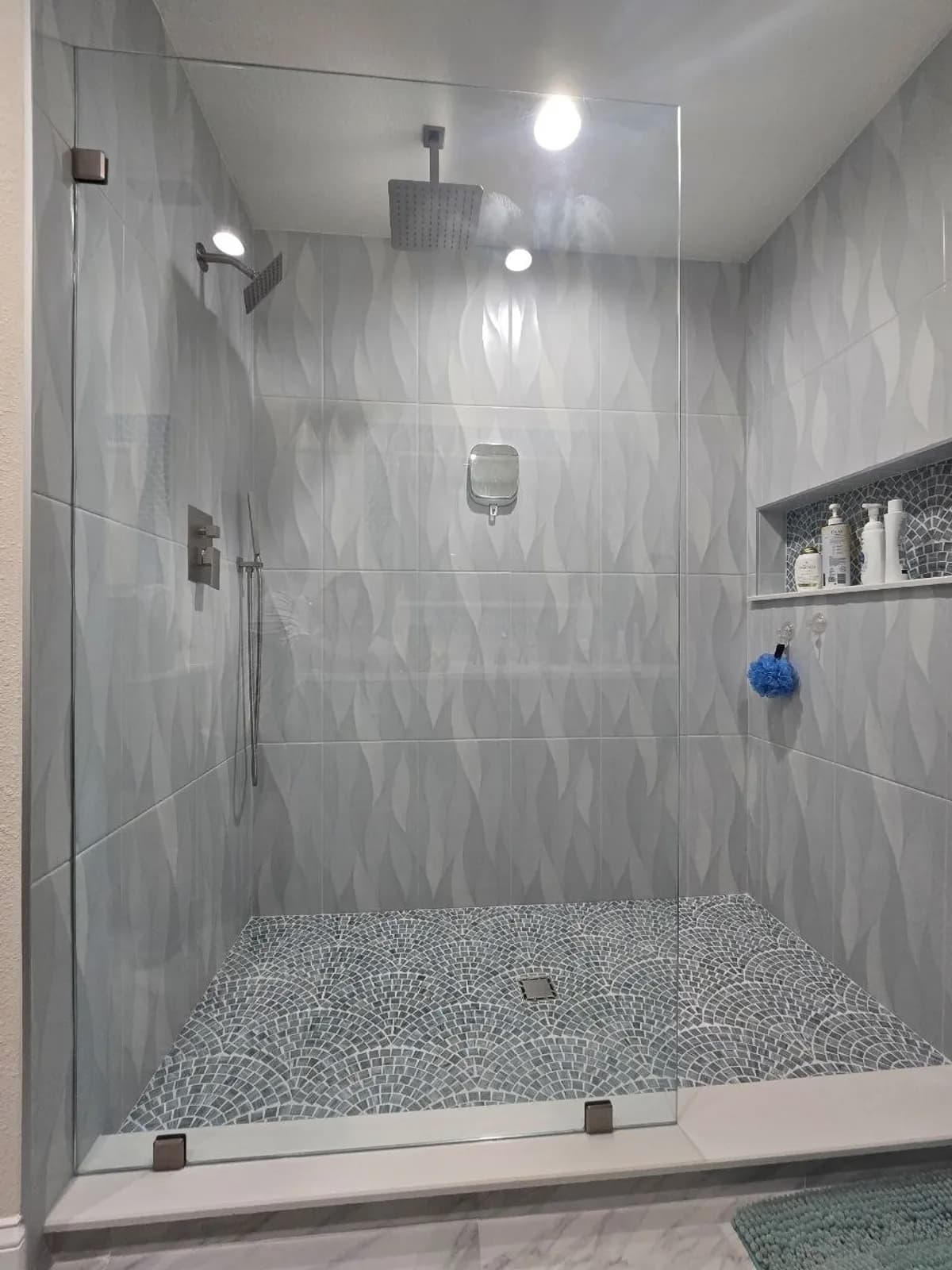
Large Format Tile in Tampa Bay: The 24x48, 30x60, and Slab Era
The fewer grout joints, the more the architecture reads. Large format porcelain has shifted from a niche choice to the dominant look in new luxury builds and high end remodels.
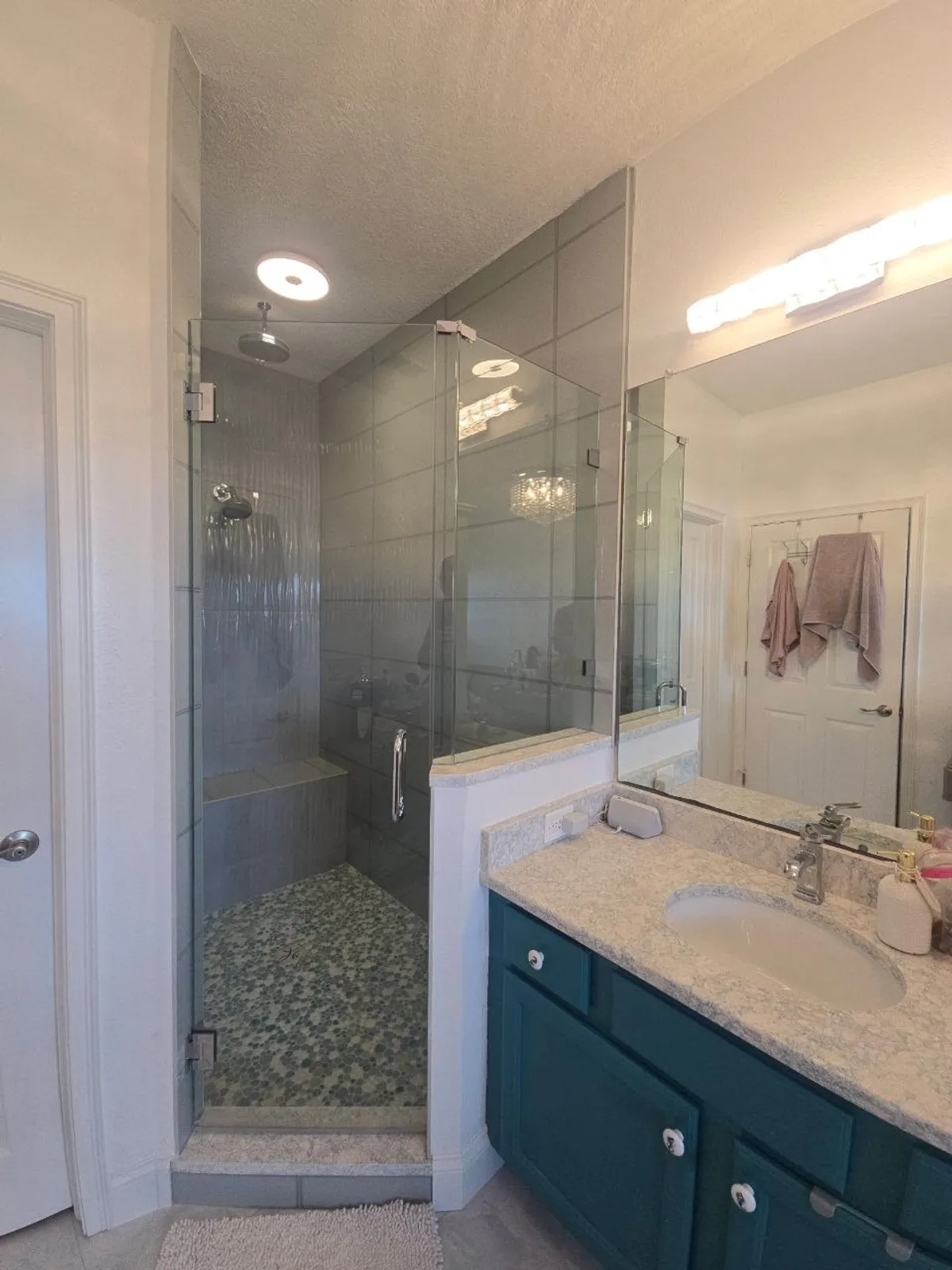
Tile Trends for 2026: What Tampa Bay Homeowners Are Choosing
A look at the eight tile and design choices showing up most in our 2026 estimates, why they work in Florida light, and where each one lands on the budget.
Every project starts with a written, itemized estimate.
Florida State Certified Building Contractor since 2007. Schluter certified installers. Serving Pasco, Hernando, Pinellas, Hillsborough, and Citrus.