
Curbless Showers: The Defining Bathroom Trend in Tampa Bay
A curbless shower is not just a curb removal. It changes the slope, the drain, the waterproofing, and the bathroom's entire spatial feel. Here is what to know.
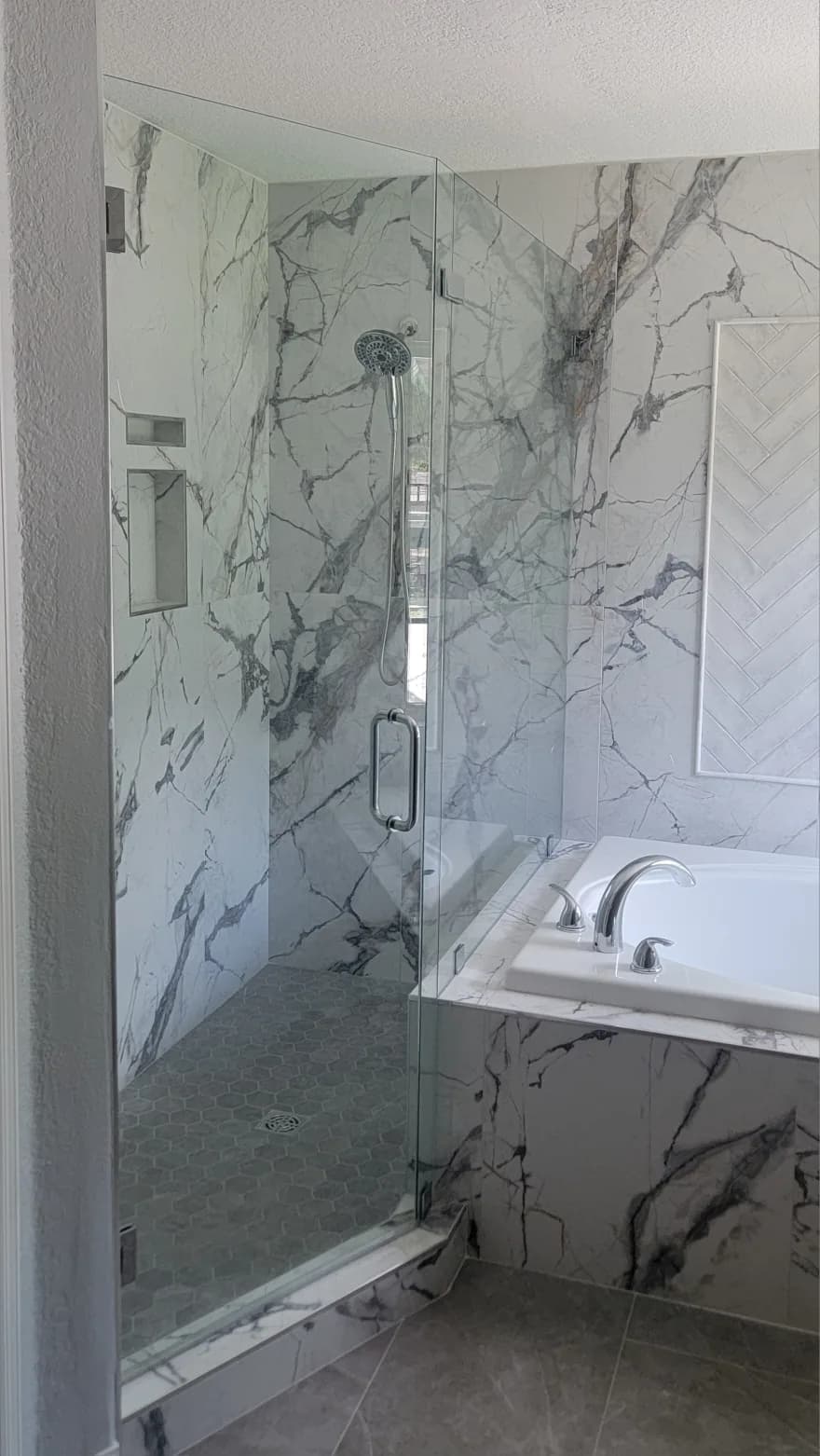
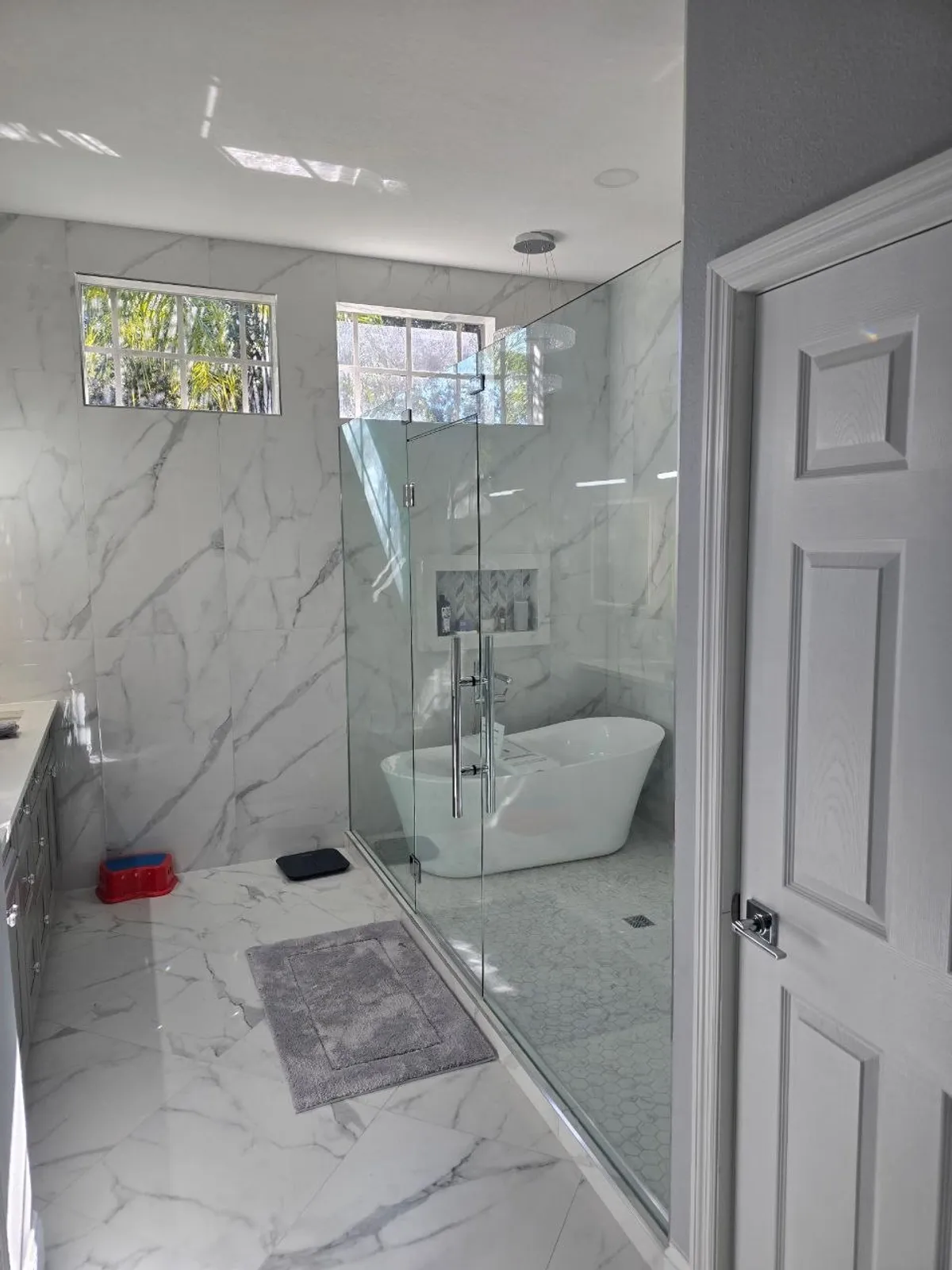
Ten years ago a walk in shower in Tampa Bay meant a shower with a glass door and a 4 inch curb you stepped over. Today, when our clients ask for a walk in, they almost always mean curbless. The shower floor sits flush with the rest of the bathroom, the entry is open or single glass panel, and water is managed by a linear drain rather than a center drain.
It is the single most defining luxury bathroom move of the current era, and almost every master bath we build in 2026 is curbless. Here is the full picture.
What makes a shower curbless
Two technical things. First, there is no curb (or threshold) at the entry. The floor flows from the bathroom into the shower at the same level. Second, the shower floor slopes in one direction toward a linear drain (usually along one wall or at the entry), rather than pyramid sloping toward a center drain. The shower floor and the bathroom floor can be the same tile, the same plane, with no interruption.
Why people love them
- Spatial. The bathroom feels bigger because the shower no longer reads as a separate room within a room. On smaller master baths in Pinellas County condos, this can be a 20 percent perceived size gain with zero square footage added.
- Aging in place. No curb to step over, no risk of trip falls, no barrier if mobility changes later. A growing number of our clients in their 50s and 60s are choosing curbless specifically as a forever home decision.
- Aesthetic. Curbs are visual interruptions. A continuous tile floor running into a curbless shower lets the bathroom architecture speak. Pair with frameless glass or a single fixed glass panel and the shower disappears into the room.
- Easier to clean. No curb to wall caulk joints to maintain. Linear drains have a single removable cover, less hair trap geometry than a center drain.
What the engineering actually requires
Lowering the subfloor
On wood frame floors (second floor master baths, additions, garages turned suites) the shower area subfloor needs to be lowered 1.25 to 1.5 inches below the surrounding floor. We do this by either sistering joists with shorter dropped joists, or by sandwiching a thinner subfloor over the same joists, depending on what the structural plan allows. On concrete slabs, we either chip down the slab in the shower footprint or build up the surrounding floor with self leveling underlayment.
Linear drain selection
The drain choice drives the slope. Most of our curbless showers use a Schluter KERDI LINE drain set along one wall (often the entry wall, which makes the slope away from the bathroom natural). KERDI LINE drains accept tile inserts (so the drain almost disappears into the floor pattern) or stainless grates in dozens of patterns. We size the drain based on shower head flow rate. A single rainhead does fine with a 28 inch linear, multi head systems need 40 to 48 inches of drain.
Waterproofing
Curbless makes the waterproofing more critical, not less. There is no curb to dam water back if something fails. We use the full Schluter Shower System with KERDI membrane wrapping floor and wall, KERDI BAND seams, and the drain flange bonded directly to the membrane. The threshold between the bathroom and the shower gets a hidden water stop strip behind the tile to prevent any unlikely splash migration.
Glass and ventilation
A single fixed glass panel (sometimes called a splash guard) is the most popular configuration. No door to swing, no track to clean, no hinge to fail. For larger walk ins we use a fixed panel plus an overhead pivot panel, or no glass at all if the shower is deep enough that the showerhead is more than 6 feet from any wet sensitive surface. Ventilation matters more in a curbless shower because there is no door to contain steam. We always pair them with an oversized bath fan (110 plus CFM) and humidity sensor.
Cost
A curbless conversion adds roughly $1,200 to $3,500 to a full bathroom remodel versus a traditional curbed walk in, depending on what the structural lowering requires and what drain and glass package you choose. On a typical Tampa Bay master bath remodel running $30,000 to $80,000, that is 2 to 8 percent of the project. For most of our clients it is the single best value per dollar upgrade in the project.
Where curbless does not work
- Some condo buildings restrict floor structure changes. Always check before designing curbless on a second floor condo, structural engineering may be required.
- Very small showers (under 32x48) tend to over spray if there is no curb. We recommend a low profile threshold or a half height splash glass in tight spaces.
- Multi head showers with body sprays generate so much water that even a properly sized linear drain can be challenged. We sometimes recommend a low curb plus interior glass on heavy use systems.
Most Tampa Bay homes can support a curbless conversion. We will tell you in the first visit whether yours can, and what it would take.
Schedule a free design visitMore from the journal
How Much Does a Bathroom Remodel Cost in Tampa Bay? (2026)
A guest bath and a master suite are not the same project, and the price gap is bigger than most homeowners expect. Here are honest Tampa Bay ranges for 2026.
Do You Need a Permit for a Bathroom Remodel in Florida?
Cosmetic updates usually do not need a permit. The moment you touch plumbing, electrical, or structure, you do. Here is the line, and who is responsible.
The Schluter Shower System, Explained for Florida Homeowners
Most tile failures in Florida bathrooms are not tile failures. They are waterproofing failures hidden behind tile. The Schluter system removes the gamble.
Every project starts with a written, itemized estimate.
Florida State Certified Building Contractor since 2007. Schluter certified installers. Serving Pasco, Hernando, Pinellas, Hillsborough, and Citrus.